Get Transparent Pricing & Free Estimates!
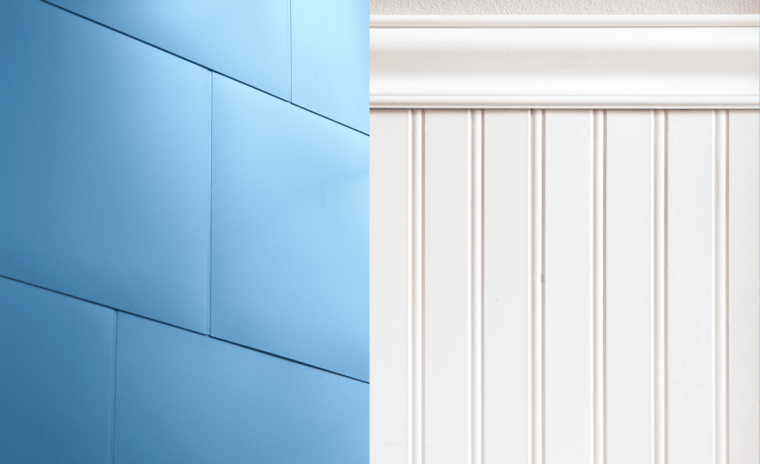
Understanding Material Structure and Longevity Performance
Fiberglass reinforced panels consist of a thermosetting polyester resin combined with woven glass fibers, creating a composite structure that distributes stress across the material. This composition delivers exceptional impact resistance because the glass fibers prevent crack propagation, while the resin matrix provides moisture impermeability. In commercial settings such as food processing plants or healthcare facilities, this combination resists corrosion from cleaning chemicals and biological contaminants without surface degradation.
Stainless steel wall panels, by contrast, are metallic alloys containing chromium (typically 10.5 percent or higher) that forms a passive oxide layer on the surface. This oxide layer regenerates when scratched, providing inherent corrosion resistance. Commercial-grade stainless steel panels are available in 304 and 316 grades, with 316 offering superior resistance to chlorides and acidic environments. The material maintains structural integrity under thermal stress, making it suitable for commercial kitchens where temperature fluctuations exceed 200 degrees Fahrenheit.
Durability claims for both materials hinge on application context. FRP panels typically deliver 15 to 20 years of service life in moisture-heavy environments such as car washes, locker rooms, and institutional kitchens. The material does not rust, dent minimally under impact, and retains color stability under UV exposure. Stainless steel systems often exceed 25 years in controlled environments but can show surface staining or pitting when exposed to repeated chloride contact, particularly in coastal regions of Florida and South Carolina where salt air accelerates electrochemical reactions. Understanding these material behaviors allows facility managers to select the wall covering that aligns with operational demands and budget constraints.
Breaking Down Upfront Expenses and Total Ownership Costs
Material cost for FRP panels ranges from $2.50 to $4.50 per square foot for standard commercial-grade sheets, while stainless steel wall panels typically cost $15 to $35 per square foot depending on gauge thickness and finish type. For a 1,000-square-foot commercial restroom renovation, material costs alone create a $10,000 to $30,000 differential before installation labor. This initial price gap often drives preliminary decision-making, yet total cost of ownership reveals a more nuanced financial picture.
Installation labor costs vary significantly between materials. FRP panel installation requires standard carpentry skills, adhesive application, and trim work, averaging $3 to $6 per square foot for professional installation. Stainless steel systems demand specialized fabrication, welding for seams, and precise alignment to prevent visible panel gaps, pushing labor costs to $12 to $20 per square foot. A contractor experienced in both materials can complete FRP installation in roughly half the time required for stainless steel, reducing facility downtime and indirect costs associated with closed operations.
Lifetime value calculations must account for maintenance frequency and repair costs. FRP panels require periodic cleaning with standard commercial detergents and occasional silicone sealant replacement at joints, costing approximately $0.15 to $0.25 per square foot annually. Stainless steel surfaces need specialized cleaners to prevent streaking and fingerprint accumulation, with annual maintenance costs averaging $0.40 to $0.60 per square foot. Surface damage repair presents another cost differential: FRP panels can be patched or replaced in sections at $150 to $300 per repair, while stainless steel dent removal or panel replacement often requires full-section removal at $800 to $1,500 per incident. Over a 15-year operational period, these maintenance differentials can offset the lower initial investment in FRP systems, particularly in high-traffic environments where surface damage occurs regularly. Facilities managing tight operating budgets should model these recurring costs against upfront capital allocation to determine the most financially sustainable wall protection solution.
How Each Material Responds to Real-World Stressors
Commercial environments subject wall surfaces to moisture exposure, chemical contact, physical impact, and temperature variation that residential applications rarely encounter. In Florida’s humid climate, where ambient moisture levels regularly exceed 70 percent, fiberglass reinforced panel systems demonstrate superior resistance to mold growth and structural degradation compared to traditional wall coverings. The non-porous surface prevents moisture infiltration that leads to substrate damage, making FRP panels the preferred solution for gas station restrooms, daycare facilities, and food service operations where moisture control is critical.
Chemical resistance becomes paramount in facilities using industrial cleaning agents or processing acidic substances. FRP panels withstand repeated exposure to quaternary ammonium compounds, sodium hypochlorite solutions, and alkaline degreasers without surface etching or discoloration. Stainless steel wall panels offer comparable chemical resistance in most applications, though certain cleaning agents containing hydrochloric acid or high chloride concentrations can compromise the protective oxide layer, leading to localized corrosion. Facilities in coastal regions of Georgia and South Carolina should account for salt air exposure when specifying stainless steel, as chloride penetration accelerates pitting corrosion even with regular maintenance.
Impact resistance proves critical in high-traffic commercial corridors where carts, equipment, and foot traffic create constant contact pressure. FRP panels absorb impact energy through material flex, returning to original shape after collisions that would dent metal surfaces. Testing data shows FRP withstanding cart impacts up to 45 foot-pounds without permanent deformation, while 20-gauge stainless steel exhibits visible denting at 30 foot-pounds. This resilience reduces repair frequency in environments such as hospital corridors, educational facilities, and distribution centers.
Temperature cycling presents another performance variable. North Carolina facilities experience seasonal temperature swings from below freezing to above 95 degrees Fahrenheit, creating thermal expansion and contraction that stresses wall systems. Stainless steel panels expand approximately 0.0096 inches per linear foot per 100-degree temperature change, requiring expansion joints in installations exceeding 10 feet. FRP panels exhibit lower thermal expansion coefficients and greater flexibility, accommodating temperature changes without joint separation or buckling. Proper installation techniques account for these material behaviors, ensuring long-term performance regardless of environmental conditions.
What to Expect During Material Installation
FRP installation typically follows a straightforward process that minimizes facility downtime. After wall preparation, which includes cleaning, moisture barrier application, and substrate repair, contractors apply construction adhesive to the back of panels and press them onto the wall surface. Standard 4-by-8-foot or 4-by-10-foot sheets cover large areas quickly, with joints sealed using silicone caulk and edges finished with PVC trim molding. A skilled installation team can complete 500 square feet of FRP panel installation per day, allowing phased implementation that keeps portions of the facility operational during renovation.
Site preparation requirements differ substantially between materials. FRP panels require a relatively smooth substrate but tolerate minor wall imperfections because the adhesive layer compensates for surface irregularities up to one-eighth inch. Stainless steel installations demand precision-level substrate preparation, as any wall deviation telegraphs through the rigid metal panels, creating visible surface waves. This preparation often includes furring strip installation, shimming to achieve plumb surfaces, and moisture barrier application, adding 40 to 60 percent more prep time compared to FRP projects.
Facility disruption extends beyond installation duration to include noise, odor, and access restrictions. FRP installation generates minimal noise from panel cutting and creates low-odor adhesive fumes that dissipate within hours, making it feasible to work during partial facility operations. Stainless steel installation involves metal cutting, grinding, and sometimes welding, producing noise levels that can disrupt adjacent operations and creating safety concerns that require area isolation. Gas station renovations, daycare facility upgrades, and healthcare environments benefit from the reduced operational impact of FRP installation.
Timeline predictability matters for commercial operations managing renovation schedules. FRP panel installation timelines rarely extend beyond projected completion dates because material availability remains consistent and installation techniques are straightforward. Stainless steel projects face greater schedule risk due to custom fabrication lead times, specialized labor availability, and weather sensitivity for exterior applications. A contractor experienced in commercial wall protection can provide realistic timeline projections that account for material-specific variables, helping facility managers coordinate renovations with operational requirements and minimize revenue disruption.
Lifecycle Management for Commercial Wall Protection
Daily maintenance requirements shape long-term operational costs and staff time allocation. FRP panels clean effectively with standard commercial cleaning solutions, requiring only spray application and wipe-down to remove soil, grease, and biological contaminants. The smooth, non-porous surface prevents bacterial colonization, meeting health department standards for food service and healthcare environments without specialized antimicrobial treatments. Cleaning staff typically spend 30 to 40 percent less time maintaining FRP surfaces compared to stainless steel, which shows water spots, fingerprints, and streaking that require buffing with microfiber cloths and stainless-specific cleaners.
Repair protocols differ fundamentally between materials. When FRP panels sustain damage, contractors can remove affected sections by cutting through silicone joints, removing the damaged panel, and adhering a replacement piece within two to three hours. The repair integrates seamlessly with surrounding panels, and color-matched replacement sheets ensure visual consistency. Stainless steel damage repair often requires panel replacement from attachment points to natural breaks, involving fastener removal, panel extraction, and new panel fabrication. Surface dents sometimes can be removed through specialized metalworking techniques, but these repairs typically cost $400 to $700 per incident and may leave visible evidence of the repair.
Lifespan extension strategies impact total cost of ownership calculations. FRP panels maintain performance through routine joint inspection and sealant renewal every five to seven years, a maintenance task that costs approximately $1.50 to $2.50 per linear foot of joint. This preventive maintenance prevents moisture infiltration behind panels, the primary cause of premature FRP system failure. Stainless steel longevity depends on surface passivation maintenance, which involves periodic treatment with citric acid or specialized passivating solutions to restore the protective oxide layer. Facilities in Virginia’s coastal regions or areas with high chloride exposure should budget for annual passivation treatments at $0.80 to $1.20 per square foot.
Replacement cycle planning allows facility managers to forecast capital expenditure requirements. FRP systems typically require replacement after 15 to 20 years in high-moisture environments, while stainless steel installations may extend 25 to 30 years in controlled settings. However, aesthetic considerations sometimes drive earlier replacement: FRP panels can show surface gloss reduction and minor color fading after 12 to 15 years of UV exposure, while stainless steel develops a patina and micro-scratching that some facility managers find objectionable. Understanding these lifecycle characteristics helps decision-makers select wall protection systems that align with both budget cycles and aesthetic standards. Professional contractors who specialize in commercial wall coverings can assess existing conditions, recommend material solutions based on specific operational requirements, and provide installation services that maximize material performance over the full service life.